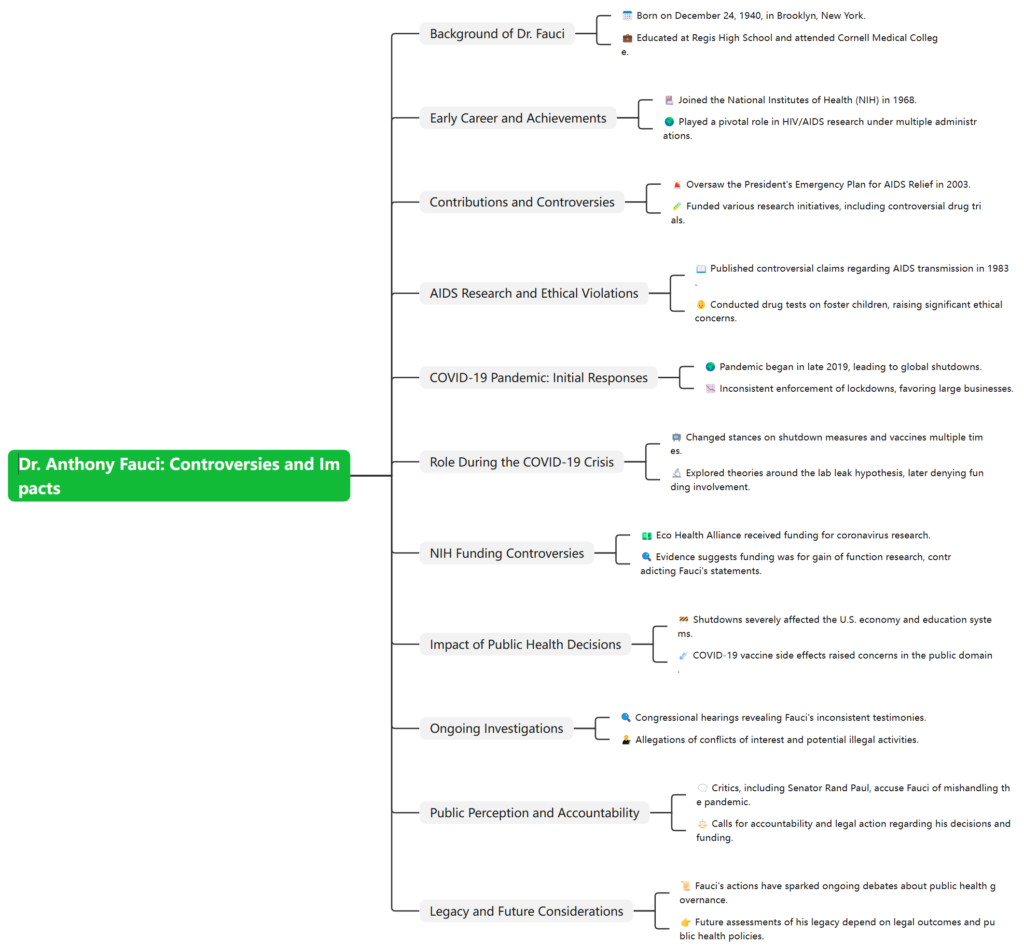
The video content centers on an inquiry into Dr. Anthony Fauci’s controversial role during the COVID-19 pandemic and his historical actions in the realm of public health. It explores accusations concerning his denial of funding for gain-of-function research at the Wuhan Institute of Virology and discusses the implications of his decisions on public health policy. The discussion also highlights inconsistencies in Fauci’s statements, particularly regarding the origins of the COVID-19 virus and measures taken during the pandemic, suggesting that these have led to significant repercussions, including economic collapse and societal unrest. The video further delves into Fauci’s medical background, scrutinizing his involvement in controversial research practices, particularly regarding AIDS clinical trials, and accusations of unethical conduct. The narrative asserts a need for accountability and calls into question Fauci’s adherence to scientific integrity, contrasting his public persona as a health defender with allegations of conflicting interests and detrimental public health decisions.
Highlights
- 💉 Dr. Fauci’s Involvement: The video discusses Fauci’s key role, highlighting evidence that suggests he approved funding for research that may have contributed to COVID-19.
- 🌍 Global Shutdown: The pandemic prompted worldwide shutdowns, with uneven enforcement that favored larger corporations over small businesses.
- 🏛️ Historical Context: Fauci’s career spans decades, marked by both significant contributions to public health and controversial decisions, particularly during the AIDS crisis.
- 🧪 Research Ethics: Accusations against Fauci involve unethical practices in AIDS drug trials, especially concerning vulnerable populations, such as children in foster care.
- ⚠️ Shifting Narratives: The video critiques Fauci’s changing statements on virus origins and public health measures, suggesting an agenda behind his shifting positions.
- ⚖️ Calls for Accountability: Figures such as Senator Rand Paul are cited in demanding accountability for Fauci’s handling of the pandemic, including potential perjury.
- 📉 Economic Impact: The document highlights the economic devastation resulting from lockdown measures, pointing to a failure in public health strategy that exacerbated societal issues.
Key Insights
- 🔍 Controversy Surrounding Gain-of-Function Research: Dr. Fauci has faced persistent scrutiny regarding the financial backing and ethical implications of gain-of-function research in Wuhan. This highlights a significant ethical dilemma within biomedical research: the line between scientific inquiry and public safety. The implications of gain-of-function research can be dire, especially when it involves potential pathogens, indicating that governance structures must be firm in oversight to prevent misuse of funding and dangerous experimentation.
- 📉 Inconsistent Lockdowns: The pandemic response often showcased a disparity in enforcement, disproportionately affecting small businesses while allowing larger establishments to operate. This raises crucial questions about the criteria used for such decisions and can serve as a case study on the effectiveness of communication strategies during crises that must manage public welfare against economic stability.
- 📅 Fauci’s Historical Impact on Health Policy: His long career, characterized by pivotal roles in various public health initiatives, portrays a dual image of a dedicated public servant and a controversial figure. The implications are significant for the public trust in science; a comprehensive understanding of Fauci’s management during the AIDS crisis illuminates how public health narratives can either fortify or erode societal confidence.
- ⚖️ Ethical Concerns in Trial Practices: The failure to ensure adequate advocacy for children involved in AIDS drug trials underlines a critical oversight in medical research ethics. It reflects broader systemic issues regarding vulnerable populations in clinical trials, emphasizing an urgent need for stringent ethical standards that protect effectively and ensure informed consent.
- 📈 Evolving Public Health Strategies: Fauci’s changing stance throughout the pandemic—from initially opposing strict lockdowns to promoting them—illustrates the complexities of public health decision-making amidst evolving scientific understanding. This pattern must be scrutinized to foster an adaptable yet transparent decision-making process that values evidence-based responses while accommodating new scientific insights.
- 🔒 Political Influences on Health Policy: The video highlights underlying political pressures that may have influenced Fauci’s directives throughout the pandemic, including the dismissive nature of certain inexpensive treatments in favor of more expensive vaccines. This raises questions on financial ethics within healthcare, challenging the system to ensure equitable access to affordable treatments while maintaining scientific integrity.
- 📢 Accountability and Governance: The demand for accountability, especially from figures like Senator Rand Paul, amplifies the need for comprehensive investigations into pandemic responses and Fauci’s conduct. It demonstrates a societal shift towards demanding transparency and accountability from public health officials, indicating an increasing sentiment that public health must be shielded from political biases.
The video provides an examination of Dr. Anthony Fauci’s career and the myriad controversies surrounding his role in public health and the COVID-19 pandemic. The analysis reframes the COVID-19 crisis not merely as a public health emergency but as a failure of leadership that potentially dictated the trajectory of the pandemic response. Central to its narrative is the assertion that accountability in public health is critical to restoring faith in scientific institutions and practices. Understanding the complexities of such decisions is essential as society navigates future public health crises, ensuring that lessons learned translate into more effective, equitable, and ethical governance.